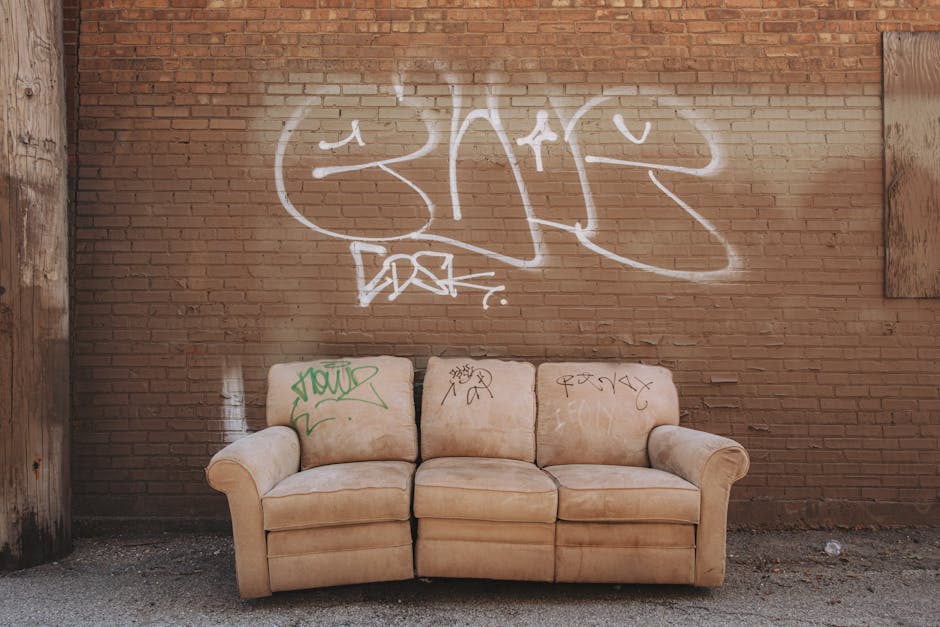
Bulky Sofa Disposal Options for Camden Residents: A Practical Guide That Saves Time, Stress, and Unnecessary Hassle
If you've got an old sofa sitting in the hallway, blocking a box room, or making the front room feel tighter every day, you're not alone. Bulky sofa disposal options for Camden residents can feel a bit confusing at first: council collections, reuse, donation, private removal, recycling, upstairs carry-outs, tight stairwells, parking restrictions... the list goes on. And if you live in Camden, you already know that narrow streets and busy drop-off points can turn a simple job into a proper headache.
This guide breaks the process down clearly. You'll see what your options are, how to choose the right one, what to avoid, and how to handle a bulky sofa in a way that is legal, sensible, and as low-stress as possible. We'll also cover the practical side people often miss: access, timing, condition, disassembly, and what happens if the sofa is still usable. To be fair, that last part matters more than many people think.
By the end, you'll have a straightforward plan instead of a vague "we'll sort it later" situation. And let's face it, later usually becomes the thing cluttering the landing.
Table of Contents
- Why sofa disposal matters in Camden
- How sofa disposal works in practice
- Key benefits and practical advantages
- Who this is for and when it makes sense
- Step-by-step guidance
- Expert tips for better results
- Common mistakes to avoid
- Tools, resources, and recommendations
- Law, compliance, and best practice
- Options and comparison table
- Case study / real-world example
- Practical checklist
- Conclusion
- Frequently asked questions
Why Bulky Sofa Disposal Options for Camden Residents Matters
A sofa is not just another bit of rubbish. It is heavy, awkward, often difficult to carry, and usually too large for normal household waste systems. In Camden, where flats, terraces, conversions, and shared entrances are common, bulky furniture removal becomes a real logistical job rather than a simple bin-day task.
Getting it right matters for a few very practical reasons. First, there is the obvious issue of space. A worn-out sofa takes up valuable room and can make a flat feel smaller, messier, and harder to live in. Second, there is safety. Dragging furniture through tight hallways or down stairs can damage walls, floors, and backs. Third, there is waste handling. If the sofa is dumped illegally or left by the street without proper collection, it can lead to fines, complaints, and a very unpleasant streetside scene. Nobody wants to walk past a damp, shredded three-seater on a Monday morning.
There is also a sustainability angle. If the sofa is in usable condition, reuse or donation may be better than disposal. Even if it is no longer comfortable in your home, parts of it may still have value. A good disposal decision is usually the one that balances convenience, cost, and environmental sense without turning your week upside down.
For residents in nearby areas too, the same practical thinking applies across the borough. If you are comparing furniture removal with other household clearances, pages like house clearance services and office clearance solutions can help you understand how different types of bulky waste are usually handled. The specific route you choose should still depend on access, condition, and timing.
How Bulky Sofa Disposal Options for Camden Residents Works
In plain English, sofa disposal usually follows one of a few paths: council collection, private bulky waste collection, donation or reuse, recycling drop-off, or a combined clearance service. The right route depends on the sofa's condition, your budget, and how quickly you need the space back.
Here is the basic flow most people follow:
- Check whether the sofa can be reused, repaired, or donated.
- Measure the item and look at access points such as stairs, lifts, gates, and parking.
- Decide whether you want the sofa removed from inside the property or left outside.
- Choose a removal method based on speed, cost, and convenience.
- Prepare the sofa by clearing cushions, removing loose items, and disassembling parts if possible.
- Make sure the collection or removal is handled by a legitimate operator or approved route.
That sounds simple, but the details matter. A two-seater that looks manageable in the living room can become a nightmare once you try to angle it round a narrow stairwell. Likewise, a sofa with removable legs or detachable arms may be much easier and cheaper to move than one-piece frame furniture. Small things, big difference.
In most cases, the most sensible approach is to start with condition. If the sofa is clean, structurally sound, and not heavily damaged, consider reuse first. If it is stained, broken, or no longer safe to sit on, disposal or recycling is the better route. If you need a broader clear-out at the same time, a service such as rubbish removal may be more practical than arranging several separate jobs.
Key Benefits and Practical Advantages
Choosing the right sofa disposal option is not just about getting rid of an old item. Done properly, it can save money, reduce stress, and prevent avoidable damage. Here are the main advantages people notice.
- Less stress on the day: When the collection method matches the property layout, the job feels smoother and less chaotic.
- Faster room recovery: You get your space back quickly, which is especially useful before a move, renovation, or new furniture delivery.
- Better environmental outcomes: Reuse and recycling are usually preferable to sending everything straight to disposal.
- Lower risk of damage: Professional handling reduces scuffed paintwork, damaged bannisters, and that awkward moment when two people are wedged in a hallway.
- Clearer compliance: Using a proper service helps reduce the risk of fly-tipping or handing waste to an unlicensed operator.
There is another benefit worth mentioning. A lot of people keep bulky furniture around far too long because the disposal feels like a mini-project. Once you have a simple plan, the job becomes manageable. Not fun, perhaps, but manageable. And that changes everything.
For many households, there is also a practical financial upside. If you are clearing multiple items at once, combining the job into one visit is often more efficient than piecemeal disposal. That is why many residents compare sofa disposal alongside other items they may want to remove, rather than treating it as a one-off emergency.
Who This Is For and When It Makes Sense
This kind of disposal guidance is useful for a wide range of Camden residents, not just people replacing a sofa. In our experience, the most common situations are actually pretty ordinary.
- People moving home: You may not want to take an old sofa to the new place, especially if it no longer suits the layout.
- Tenants ending a tenancy: Timing matters, and landlords or letting agents often expect the property to be left clear.
- Homeowners redecorating: A new layout, new carpet, or new flooring often makes the old sofa feel impossible to keep.
- Families upgrading furniture: If the replacement is already on the way, the old one needs to go before delivery day turns into a traffic jam indoors.
- People dealing with wear and tear: Sagging cushions, broken frames, and tired upholstery can make disposal the sensible choice.
It also makes sense when a sofa is simply too awkward to handle alone. Maybe you live on an upper floor. Maybe the lift is out of action. Maybe the front door opens into a narrow staircase that seems designed, frankly, by someone who had never seen a sofa in their life. In those situations, the disposal method matters as much as the disposal itself.
If you are clearing a flat with other bulky items, it can help to think in terms of the whole job. A dedicated furniture disposal service may be a better fit than trying to remove one item at a time.
Step-by-Step Guidance
Here is a practical way to tackle sofa disposal without overcomplicating it.
1. Check the sofa's condition
Start with a simple reality check. Is it usable, repairable, or beyond saving? If the frame is solid and the upholstery is clean, reuse may be possible. If it smells musty, is badly stained, or has broken springs, disposal is usually the better route. Be honest here. It saves time later.
2. Measure the sofa and the route out
Measure the length, depth, and height of the sofa. Then look at doorways, stairs, lift dimensions, bends in the hallway, and any awkward turns. This step sounds dull, but it avoids the classic "it looked smaller on the website" problem. If the item may need to be turned or lifted over a banister, note that too.
3. Decide whether the sofa needs dismantling
Some sofas have removable legs, detachable arms, or split sections. Taking these apart can make the removal easier and reduce the risk of damage. Keep screws, brackets, and small fittings in a labelled bag if you think anyone might reuse the frame or if you want tidy handling. Simple, but effective.
4. Choose the disposal route
There are several legitimate options. The best one depends on urgency, budget, condition, and convenience. If the sofa is in decent shape, donation or reuse might be suitable. If you want it gone quickly and from inside the property, a private collection is often the least hassle. If you can wait and the council collection route fits your schedule, that may be enough.
5. Prepare the item for collection
Remove cushions, personal items, blankets, and loose fittings. Clear a path to the door. If you live in a block, let neighbours know if hallways or entrances may be briefly restricted. That small bit of courtesy goes a long way, especially in busy Camden streets where everyone seems to be carrying something heavy at the same time.
6. Confirm who is collecting and where from
Make sure you know whether the sofa will be collected from inside, outside the property, or from a designated ground-floor point. Ask what happens if access is difficult, or if the item is too large to move in one piece. A clear conversation before the day can save you from an awkward stand-off with a sofa stuck halfway through the front door. Nobody needs that drama.
7. Check the outcome
After collection, check that the area is left safe and free of stray fittings, screws, or bits of fabric. If the sofa was being removed as part of a larger clear-out, make sure the other items are handled as agreed. A quick final check is worth the thirty seconds.
Expert Tips for Better Results
Here are a few practical tips that make sofa disposal easier in real life, not just in theory.
- Book around delivery dates: If a new sofa is arriving, arrange disposal before the delivery window if possible. It reduces stress and keeps the hallway clear.
- Use the quietest access time: Morning slots can be easier in busier Camden streets, especially where parking and loading are tight.
- Photograph the sofa first: A photo helps confirm size and condition if you are getting a quote or asking about removal options.
- Be realistic about "reusable": If the sofa is heavily worn or smoke-damaged, donation may not be suitable even if it still looks okay from a distance.
- Ask about inside collection: That small difference can matter a lot if you live upstairs or have a narrow entrance.
- Combine waste streams carefully: If you also have chairs, mattresses, or general clutter, make sure the service you choose can handle all of it in one visit.
One little thing people forget: fabric sofas can hold dust, pet hair, and odours in ways that become very obvious once you start shifting them. If you are moving it through a shared stairwell on a warm afternoon, you'll notice. Best to wrap or prepare it properly if the removal route allows for that.
A useful rule of thumb? If the sofa is awkward for two reasonably fit adults to move, treat it as a proper bulky removal job, not a quick lift-and-shift. Saves a lot of regret.
Common Mistakes to Avoid
Most sofa disposal problems are avoidable. The issues below come up time and again, and usually because people are trying to save ten minutes.
- Leaving it on the street without a proper arrangement: That can quickly become fly-tipping territory if it is not collected promptly and lawfully.
- Not checking access first: The sofa might fit outside but not inside the route out. That is a classic trap.
- Forgetting about parking or loading space: In Camden, this can be the difference between a smooth pickup and a long, frustrating wait.
- Assuming donation is always possible: Reuse is great, but organisations usually have condition standards.
- Not separating cushions or detachable parts: It sounds minor, but it can make handling much simpler.
- Choosing a service based only on price: Cheapest is not always best if the job is rushed, poorly handled, or unclear on what is included.
Another mistake is waiting until the last minute. If the new carpet is being fitted tomorrow morning and the sofa is still in the lounge tonight... well, that is not ideal. Give yourself a bit of breathing room if you can.
Tools, Resources and Recommendations
You do not need a van full of equipment to deal with one sofa, but a few basic tools and preparations help a lot.
- Measuring tape: Essential for checking doorways, stair landings, and the sofa itself.
- Strong gloves: Helpful if there are staples, broken frame edges, or rough fabric.
- Blankets or furniture covers: Useful for protecting walls and flooring during movement.
- Tape or small bags: Handy for keeping screws, legs, and fittings together if the sofa is dismantled.
- Mobile phone camera: Good for taking quick photos of the item and access route.
On the service side, it helps to compare removal options alongside your broader needs. If the sofa is one part of a bigger room refresh, a service focused on garage clearance or shed clearance may be relevant if you have other bulky items waiting in storage. Likewise, if the item is part of a household clear-out after a move or bereavement, a more complete clearance approach can reduce the number of separate visits.
Think in terms of convenience and fit, not just disposal. The best solution is often the one that matches your property, your timeline, and your tolerance for hassle. Nothing fancy. Just workable.
Law, Compliance, Standards, or Best Practice
When dealing with bulky furniture, the main compliance concern is making sure waste is handled responsibly and by a legitimate operator if you are using a private service. In the UK, household waste should be managed carefully, and residents should avoid passing items to anyone who cannot show they are properly authorised to carry waste. That is especially important for bulky items, because illegal dumping can create a traceable problem for the person who handed it over.
Best practice is straightforward:
- Use a recognised route: Council collection, approved reuse, or a reputable private remover.
- Keep evidence if needed: Photos, booking confirmation, and basic records can be useful.
- Do not leave waste in public spaces: Unless it has been arranged for collection and placed exactly as instructed.
- Ask about disposal destination: If the sofa cannot be reused, it should be taken to an appropriate facility or processing route.
- Be cautious with unlicensed collectors: A low price can come with a high risk if the item ends up dumped elsewhere.
If you live in a block with a managing agent or landlord, there may also be building rules about where items can be left before collection. Those are not the same as legal waste rules, but they matter in practice. A quick check now saves awkward messages later.
In short: sensible handling, proper collection, and a bit of documentation go a long way. It's not glamorous, but it is the safe way to do it.
Options and Comparison Table
Different disposal methods suit different situations. Here is a simple comparison to help you decide.
| Option | Best for | Main advantage | Possible drawback |
|---|---|---|---|
| Council bulky waste collection | Residents who can wait and have a straightforward item | Often a familiar, structured route | May involve set dates and specific conditions |
| Private sofa removal | Urgent jobs, upstairs flats, awkward access | Convenient and flexible | Usually more expensive than basic collection options |
| Donation or reuse | Clean, sound sofas in good condition | Extends the item's life and can feel better than disposal | Condition standards are often strict |
| Recycling route | Sofas beyond reuse but still suitable for material recovery | More responsible than dumping | May require specific handling or transport |
| Combined clearance service | Multiple bulky items or larger clear-outs | One visit can solve several problems at once | Can feel unnecessary if you only have one item |
If you are dealing with multiple rooms or a larger household clearance, it can be helpful to explore broader services such as estate clearance or flat clearance. Those options are not needed for every sofa, obviously, but they become relevant when the single item is part of a bigger job.
Case Study or Real-World Example
Here's a realistic Camden scenario. A couple in a second-floor flat near a busy high street wanted to replace a three-seater sofa before a new delivery arrived. The old sofa was still usable, but it had sagged in the middle, one arm was loose, and it was too bulky to navigate the narrow turn in the stairwell without careful planning.
They first measured the sofa and checked the route from the living room to the front door. That turned out to be the key step. The legs were removable, so those came off first. They also cleared the hallway and told the neighbours about a short period of movement through the shared entrance. Nothing dramatic, just courtesy.
Because the sofa still had some life left, they checked whether reuse was possible. In the end, the item was not suitable for donation, so disposal was the better option. A planned removal meant there was no last-minute panic, no damage to the wall corners, and no awkward moment with the new sofa waiting outside in the rain. Truth be told, that rain part happens more often than people expect in London.
The main lesson was simple: measuring, timing, and access planning made the job easy enough. Not effortless, but easy enough. And that is usually the sweet spot.
Practical Checklist
Use this before arranging sofa disposal in Camden.
- Check whether the sofa is reusable, repairable, or ready for disposal
- Measure the sofa and the full removal route
- Note stairs, lifts, narrow turns, and outdoor parking or loading access
- Remove cushions, loose items, and detachable legs or arms if possible
- Decide whether you need inside collection or outside collection
- Compare council, private, reuse, and recycling options
- Confirm timing, pricing, and what is included before booking
- Check that the operator is appropriate and the waste is handled properly
- Protect floors and walls if the sofa needs to be moved through tight spaces
- Keep any confirmation details or booking records until the job is complete
Expert summary: The easiest sofa disposal jobs are the ones planned around access, condition, and timing. If you get those three things right, everything else tends to fall into place. If you ignore them, the sofa somehow gets heavier. Funny how that works.
Conclusion
Bulky sofa disposal options for Camden residents come down to one core idea: choose the method that fits your situation instead of forcing the item into the wrong process. A sofa in good condition may be suitable for reuse. An awkward, worn, or damaged one may need a proper removal or recycling route. Either way, the smartest move is to plan around access, condition, and timing before the problem turns into a bigger job than it needs to be.
Camden living often means tight staircases, shared entrances, limited parking, and a busy pace. So a little planning makes a big difference. Whether you are replacing one sofa or clearing several bulky items, the right approach will save time, reduce stress, and help you avoid the common pitfalls people run into when they leave it too late.
If you want a simple next step, compare your options now and choose the one that gives you the best mix of convenience, value, and peace of mind. That small decision can clear the room and clear your head, which is no bad thing.
Get a free quote today and see how much you can save.
And once the sofa is gone, it is amazing how quickly a room starts to breathe again.
Frequently Asked Questions
What is the best way to dispose of a bulky sofa in Camden?
The best option depends on condition, access, and urgency. If the sofa is reusable, donation or reuse may be suitable. If it is damaged or hard to move, a private bulky removal service or approved collection route is often the most practical choice.
Can I leave my sofa on the pavement for collection?
Only if it has been arranged properly and placed in line with the instructions for that collection. Leaving furniture out without a legitimate collection plan can lead to fly-tipping issues and possible penalties.
How do I know if my sofa can be donated?
As a general rule, a donated sofa should be clean, structurally sound, and safe to use. If it is badly stained, torn, broken, or smells strongly of smoke or damp, it may not meet reuse standards.
Do I need to dismantle the sofa before removal?
Not always, but removing legs or separating sections can make the job much easier. If the sofa is too large for the route out, dismantling may be essential. It depends on the design and the property layout.
Is private sofa removal more expensive than council collection?
Often, yes, but you are usually paying for speed, flexibility, and easier handling. If you need the item removed from inside a flat or on short notice, the extra cost may be worth it.
What if my sofa is upstairs with narrow stairs?
That is common in Camden and usually manageable with the right planning. Measure the route, look at turn points, and make sure the removal method you choose can handle upstairs access.
Can I dispose of other furniture at the same time?
Yes, often you can. In fact, combining items can make the visit more efficient. Just make sure the service you choose is set up to handle everything you want removed.
How quickly can a sofa be removed?
That depends on the service and your schedule. Some removal options can be arranged quickly, while others follow set collection windows. If you have a delivery or move coming up, book early if possible.
What should I ask before booking a sofa disposal service?
Ask what is included, whether the item can be collected from inside the property, how access issues are handled, and where the sofa will go if it cannot be reused. Those details matter more than people think.
Is it okay to put the sofa in a communal area first?
Sometimes, but only if building rules allow it and it does not block access or create a fire risk. In shared buildings, it is usually better to keep the item in your own space until collection is confirmed.
What happens if the sofa is too large to get out?
Usually the next step is to look at dismantling options or use a service that can manage awkward removals. If neither is possible, the disposal plan may need to change slightly rather than forcing the item through and risking damage.
How can I avoid illegal sofa dumping?
Use a proper collection route, check that the operator is legitimate, and keep confirmation details. Never hand waste to someone who cannot explain where it will go. A cheap shortcut can become a much bigger problem later.