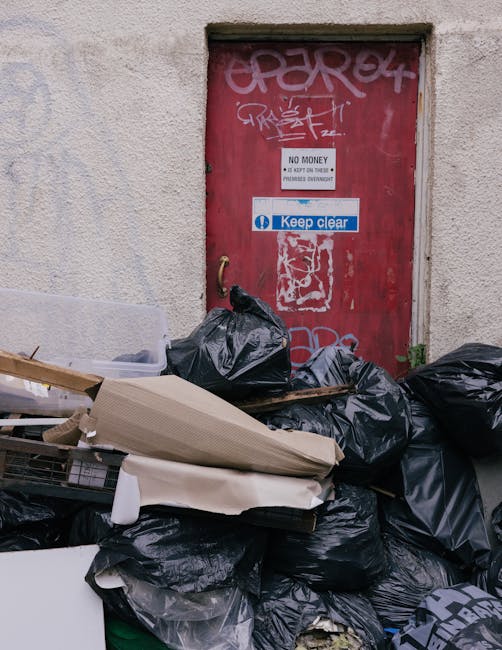
Who Pays for Landlord Rubbish Removal in NW1 Flats?
If you are dealing with clutter, abandoned furniture, or a flat that needs clearing after a tenancy, the big question is usually not what needs removing. It is this: who pays for landlord rubbish removal in NW1 flats? The answer is not always neat. It depends on the tenancy agreement, what was left behind, whether the waste belongs to the tenant or the landlord, and how quickly the situation needs sorting.
In NW1, where flats can range from compact conversions to busy blocks with limited access, rubbish removal often becomes a practical issue before it becomes a legal one. Stairs are narrow, time is short, neighbours notice everything, and let's face it, a single hallway stacked with broken drawers can become everyone's problem by Friday afternoon. This guide breaks the topic down in plain English so you can understand responsibility, avoid disputes, and choose the right next step.
Along the way, we will cover the likely cost split, the main legal and practical considerations, common mistakes, and when it makes sense to use a professional clearance service. If you want background on the company behind this site, you can also review the about us page, or check the recycling and sustainability approach if disposal ethics matter to you.
Table of Contents
- Why Who Pays for Landlord Rubbish Removal in NW1 Flats? Matters
- How Who Pays for Landlord Rubbish Removal in NW1 Flats? Works
- Key Benefits and Practical Advantages
- Who This Is For and When It Makes Sense
- Step-by-Step Guidance
- Expert Tips for Better Results
- Common Mistakes to Avoid
- Tools, Resources and Recommendations
- Law, Compliance, Standards, or Best Practice
- Options, Methods, or Comparison Table
- Case Study or Real-World Example
- Practical Checklist
- Conclusion
- Frequently Asked Questions
Why Who Pays for Landlord Rubbish Removal in NW1 Flats? Matters
This question matters because rubbish removal is rarely just about waste. It can affect deposit deductions, void periods, compliance, neighbour relations, and the speed at which a flat can be re-let or handed back. In a dense postcode like NW1, delay is expensive in more ways than one. A missed clearance can slow down a check-out, trigger complaints from the block, and create awkward finger-pointing between landlord, tenant, letting agent, and managing agent.
There is also the simple reality that flats are different from houses. Shared entrances, lift bookings, parking restrictions, and limited loading space can add time and cost. If a landlord assumes the tenant will deal with everything, but the agreement says otherwise, that assumption can turn into a disagreement very quickly. On the other hand, tenants sometimes believe anything left in a flat automatically becomes the landlord's issue. Usually, it is not that straightforward.
The real value in understanding responsibility is peace of mind. You know who should be paying, who should be arranging the clearance, and what evidence you need if there is a dispute. That clarity saves time and, honestly, a fair bit of stress too.
Expert summary: In most NW1 flat clearances, the right payer depends on ownership, tenancy terms, and whether the items are tenant waste, landlord waste, or abandoned goods. The fastest way to avoid confusion is to document the state of the flat early and agree responsibility before booking removal.
How Who Pays for Landlord Rubbish Removal in NW1 Flats? Works
The answer usually starts with the lease, tenancy agreement, or management agreement. That document should say who is responsible for removing belongings and waste at the end of a tenancy or after a property changeover. If it is clear, the decision is usually clear too. If it is not clear, then the practical facts matter: who left the rubbish, when it appeared, and whether it is ordinary household waste, bulky waste, or leftover fixtures and furniture.
For many flats, the split looks something like this:
- Tenant responsibility: rubbish left behind after moving out, bulky items that were theirs, or waste created during occupation that was not removed before check-out.
- Landlord responsibility: clearance needed before marketing a vacant flat, rubbish from inherited landlord belongings, or waste arising from refurbishment and property preparation.
- Shared or disputed responsibility: abandoned items with unclear ownership, items left by former occupiers, or cases where the tenancy terms are vague.
In real life, the tricky part is evidence. Photos from the inventory, check-in, and check-out are often the difference between a straightforward bill and a long email chain. If there is a letting agent involved, they may also help establish who was supposed to clear what. Sometimes the agent is the messenger, sometimes the referee. Sometimes both. Not glamorous, but useful.
If you are arranging a professional clearance, costs are usually influenced by access, volume, sorting requirements, and whether the work needs to be done at short notice. You can review the company's pricing and quotes information if you want to understand how estimates are approached, and the payment and security page if you are checking how payment is handled.
Key Benefits and Practical Advantages
Sorting out responsibility properly has benefits that go beyond avoiding an argument. The first is speed. Once everyone knows who pays, the flat can move from messy to marketable much faster. That matters if a new tenant is waiting, the building manager has set a deadline, or the landlord wants the property ready for photos before the weekend.
The second benefit is cost control. A landlord who pays for waste that the tenant should have removed may end up with unnecessary expense. A tenant who is charged for items they did not leave behind may dispute deductions later. Clear responsibility reduces both risks.
The third benefit is compliance and presentation. A clean flat is easier to inspect, easier to maintain, and less likely to attract pest or odour issues. To be fair, nobody enjoys walking into a flat that smells faintly of damp cardboard and old takeaway boxes. It's not exactly the welcome home moment anyone wants.
- Fewer disputes: everyone knows the basis for the decision.
- Faster turnaround: clearing can happen without waiting around.
- Better budgeting: planned removal is cheaper than emergency removal.
- Improved tenant relations: clear expectations feel fairer.
- Cleaner building reputation: neighbours and managing agents notice when things are handled well.
There is also a softer benefit: confidence. When the responsibility is documented and the removal is handled properly, the whole process feels less like a scramble. That calm, slightly boring efficiency is often exactly what a landlord needs.
Who This Is For and When It Makes Sense
This topic is relevant to landlords, tenants, letting agents, estate managers, and block managers across NW1. It is especially useful when a flat is changing hands, a tenancy has ended badly, or furniture has been abandoned in a property that needs to be turned around quickly.
It also makes sense when there is a practical problem rather than a legal one. Maybe the loft cupboard is packed with old boxes. Maybe there is a sofa that will not fit through the door without careful handling. Maybe a previous occupant left more than a few bags, and now the hallway is an obstacle course. In these moments, the question is not just who pays, but who acts first.
Here is a simple way to think about it:
- Landlords should care when the flat must be made ready for sale, letting, renovation, or inspection.
- Tenants should care when they are moving out and want to avoid unfair deductions or disputes.
- Agents should care when they are coordinating a handover and need a clean, documented process.
- Managing agents should care when common areas, access rules, or building standards affect removal logistics.
If you are in doubt, ask this plain question: whose waste is it, and what does the agreement say? That usually gets you closer to the answer than any amount of guesswork.
Step-by-Step Guidance
Here is a practical way to handle landlord rubbish removal in an NW1 flat without turning it into a saga.
1. Check the tenancy or management paperwork
Start with the agreement. Look for clauses on cleaning, waste disposal, inventory condition, and end-of-tenancy obligations. If the flat is leasehold or managed by a third party, check whether the building has any rules about bulky waste, shared areas, or contractor access.
2. Identify what has actually been left behind
Make a clear list. Separate general rubbish, bags of mixed waste, furniture, appliances, fixtures, and any personal items. This matters because mixed loads can be handled differently from a single sofa or mattress.
3. Gather evidence early
Take dated photos. Keep messages. Save the inventory report if there is one. If you are a landlord, this is the point where good paperwork quietly earns its keep. If you are a tenant, it is the point where a few tidy photos can save an awful lot of back-and-forth.
4. Decide whether the issue is tenant-led, landlord-led, or shared
If the items clearly belong to the tenant, the tenant may be responsible. If the flat is being cleared for a new letting or refurbishment, the landlord may need to arrange it. If responsibility is unclear, a pragmatic split may be better than a standoff, especially when time is tight.
5. Arrange the clearance safely
Flats often mean stairs, lifts, shared corridors, and parking restrictions. Check access, protect communal areas, and book the job for a time that suits the building. If heavy lifting or awkward access is involved, do not improvise. That is how doors, walls, and backs get damaged.
6. Confirm disposal and keep records
Ask for confirmation of what was removed and how the job was handled. Keep the paperwork with the tenancy file or property records. That little bit of admin can be useful later, especially if a deposit dispute arises.
Expert Tips for Better Results
In our experience, the smoothest flat clearances are rarely the ones with the cheapest quote. They are the ones where everyone has a clear brief. A few practical habits make a real difference.
- Use an inventory at both ends: check-in and check-out records reduce arguments.
- Separate rubbish from abandoned valuables: personal papers, keys, and important documents should never be treated casually.
- Plan around building access: many NW1 blocks have limited parking or concierge rules.
- Ask about insurance: this is especially sensible if bulky items must pass through tight communal spaces.
- Choose a disposal partner with sustainability in mind: responsible sorting and recycling can reduce the environmental burden.
A small but important tip: if the flat is on a higher floor, assume the job will take longer than it looks from the estate agent photos. Those photos are always flattering, aren't they? The stairwell, not so much.
You may also want to check a provider's insurance and safety position before booking, and read the health and safety policy if the removal involves heavier or more awkward items. It is boring reading, yes, but useful boring reading.
Common Mistakes to Avoid
Most disputes around rubbish removal are surprisingly avoidable. The same few mistakes keep showing up.
- Assuming the landlord always pays: not true, and often not fair.
- Assuming the tenant always pays: also not true, especially for landlord-owned clutter or pre-existing waste.
- Leaving the decision too late: delays usually increase cost and stress.
- Ignoring access issues: a clearance that looks simple on paper can become awkward very fast in a London block.
- Not photographing the condition: without evidence, disputes become longer and less productive.
- Mixing personal belongings with waste: once items are removed, sorting them back out is not always possible.
One more thing people forget: check whether the building has specific disposal arrangements. Some blocks are very particular about shared bin stores or contractor access. If you ignore that, the building manager may not be amused. And in fairness, they probably have enough on their plate already.
Tools, Resources and Recommendations
You do not need fancy software to manage flat rubbish removal, but a few simple tools make the process much smoother.
- Phone camera: for timestamped photos before and after clearance.
- Inventory checklist: to compare what was present at move-in and move-out.
- Message trail: email or written messages are better than verbal assumptions.
- Folder for receipts and job notes: especially useful for landlords and agents managing several properties.
- Access notes: lift size, stair count, parking restrictions, and any concierge rules.
If you are comparing service providers, it helps to understand how they handle communication, payment, and environmental responsibility. The contact page is the right place to ask direct questions, while the recycling and sustainability page gives a clearer picture of disposal practices. For broader trust information, the terms and conditions and complaints procedure are also worth a look.
Law, Compliance, Standards, or Best Practice
Because waste handling can affect safety, liability, and property management, it is wise to treat this as more than a simple tidy-up. The exact legal position depends on the facts of the case and the wording of the tenancy or lease. This article is not legal advice, but some best-practice principles are widely sensible.
First, identify ownership of the waste. If the items are clearly the tenant's and the agreement requires them to leave the flat clean and clear, there is a strong practical basis for tenant responsibility. If the waste relates to the landlord's property preparation, refurbishment, or inherited clutter, the landlord will usually bear the cost.
Second, use a documented process. Invoices, photos, written instructions, and handover notes help reduce disputes. This is especially important where deposit deductions may be discussed later.
Third, use safe handling practices. Shared hallways, stairwells, and entrances in NW1 flats can create trip hazards and damage risk. A careful clearance process helps protect the property and the people in it.
Fourth, choose responsible disposal methods. Mixed waste should be sorted properly where possible, and reusable items should not be treated as rubbish if they can be passed on appropriately. Businesses in this space should also have clear policies around standards and conduct. If that matters to you, the company's modern slavery statement and accessibility statement can be useful trust signals, even if they are not directly about rubbish removal.
Best practice, in short, is simple: document, confirm, and dispose responsibly. Nothing flashy. Just the kind of process that keeps everyone out of trouble.
Options, Methods, or Comparison Table
If you are deciding how to handle the clearance, here is a practical comparison of the main approaches.
| Option | Best for | Pros | Cons |
|---|---|---|---|
| Tenant arranges removal | End-of-tenancy waste left by occupier | Clear responsibility, often fastest if agreed early | Disputes can happen if the tenancy terms are unclear |
| Landlord arranges removal | Vacant flats, landlord-owned items, refurbishment waste | Quick control over timing and presentation | May cost more if done urgently |
| Agent coordinates clearance | Managed properties and handovers | Central communication, less chasing around | Decision-making may still depend on landlord approval |
| Shared or negotiated split | Grey areas and disputed responsibility | Can keep things moving without a standoff | Needs clear agreement in writing |
There is no one-size-fits-all answer. The best option is usually the one that matches the paperwork, the timeline, and the reality on the ground. If the flat is empty and the issue is just a few bags, a simple arrangement may be enough. If it is a full clearance with bulky items, access concerns, and a deadline, a more structured approach is wiser.
Case Study or Real-World Example
Picture a typical NW1 flat after a tenant has moved out on a damp Monday morning. The keys are back, the carpets are visible again, and the hallway still has a broken chair, two black bags, a half-dismantled wardrobe, and a battered kettle that nobody seems to recognise. The landlord thinks the tenant should pay. The tenant says the items were already there. The agent is stuck in the middle, trying to get the flat ready for viewings by Thursday.
What usually helps in a situation like this is not guesswork. It is the paperwork.
If there are check-in photos showing the flat was clear, and the check-out notes confirm the items were left behind, the case for tenant responsibility becomes much stronger. If not, the landlord may choose to pay for the removal simply to avoid delay, then decide whether to pursue recovery later. That is often a commercial decision, not a moral one. Not very romantic, but very real.
In this kind of case, the most successful outcome is often the simplest one: document the issue, agree who is paying, and get the flat cleared quickly enough to protect the next booking or tenancy start date. The emotional win is small but genuine. The flat goes from awkward to usable. The building feels calm again. Everyone gets on with their day.
Practical Checklist
Use this checklist before you book or approve landlord rubbish removal in an NW1 flat.
- Confirm who left the rubbish or items.
- Check the tenancy, lease, or management agreement.
- Review check-in and check-out photos.
- Make a list of bulky items and mixed waste.
- Confirm building access, parking, and lift availability.
- Decide who is paying and get it in writing.
- Check whether any items need separating from general waste.
- Choose a provider that can handle flat access safely.
- Keep invoices, notes, and clearance confirmation on file.
- Review sustainability and disposal handling if that matters to your organisation.
Take two minutes and do this properly. It saves hours later.
Conclusion
So, who pays for landlord rubbish removal in NW1 flats? Usually, it depends on who created the waste, what the agreement says, and whether the clearance is part of a tenant handover or a landlord-led property preparation. Once you look at the facts calmly, the answer is often clearer than it first appears.
The main thing is to avoid assumptions. Confirm the paperwork, document the condition, and keep the process practical. In a busy part of London like NW1, speed matters, but clarity matters more. A little structure now can prevent a much bigger mess later.
If you are handling a flat clearance and want a straightforward next step, review the service information, compare your options, and speak to someone who can explain the process clearly. No drama, no fluff, just a sensible plan that gets the flat back into shape.
Get a free quote today and see how much you can save.
Frequently Asked Questions
Who usually pays for rubbish left in a rented flat?
Usually the person who left the rubbish pays, especially if the tenancy agreement says the flat must be returned clean and empty. If the rubbish is clearly landlord-owned or related to property works, the landlord may need to pay instead.
Can a landlord charge a tenant for rubbish removal in NW1?
They may be able to, but only if the tenancy terms support it and there is reasonable evidence that the tenant left the waste behind. Good photos, an inventory, and written notes make this much easier to justify.
What if the flat was already full of rubbish before the tenant moved in?
Then the responsibility may sit with the landlord, especially if the condition was recorded at the start of the tenancy. This is why check-in evidence matters so much.
Does rubbish removal count as part of end-of-tenancy cleaning?
Not always. Cleaning and rubbish removal are related, but they are not the same thing. A tenant may clean a flat but still leave bulky items, or remove rubbish but leave the place untidy. The agreement should say what is expected.
What happens if the tenant has already left and cannot be reached?
The landlord or agent may still need to arrange removal to avoid delays or nuisance in the building. If the waste appears to belong to the former tenant, records can help support later recovery efforts.
Is the landlord responsible for abandoned furniture in a vacant flat?
Sometimes yes, sometimes no. If the furniture belongs to the landlord or is left as part of the property, the landlord will usually handle it. If a tenant or occupier abandoned it, responsibility may be disputed and should be checked against the evidence.
How can I avoid a deposit dispute over rubbish removal?
Take clear photos, keep the inventory, and make sure any expectations are written down before move-out. If you agree on the issue early, disputes are much less likely.
Do flat clearances in NW1 cost more because of access issues?
They can. Stairs, narrow corridors, parking restrictions, and lift limitations often add time and effort. That is why access details matter when requesting a quote.
Should a landlord remove rubbish before marketing a flat?
In most cases, yes. A clear, tidy flat is easier to photograph, safer to inspect, and more attractive to prospective tenants or buyers. It also helps avoid complaints from neighbours and building managers.
What records should I keep after rubbish removal?
Keep the quote, invoice, before-and-after photos, any written agreement about who pays, and notes about what was removed. These records are useful if a question comes up later.
Can bulky waste and general rubbish be removed together?
Often yes, but it depends on the type of waste and the provider's handling process. Bulky furniture, white goods, and mixed rubbish may need to be separated or assessed for safe loading and disposal.
What is the smartest first step if responsibility is unclear?
Check the paperwork and take photos before moving anything. That simple step gives you the best chance of resolving the issue fairly and quickly.
Where can I get more information about the company's policies?
You can review the terms and conditions, insurance and safety, and complaints procedure pages for more detail on how things are handled.